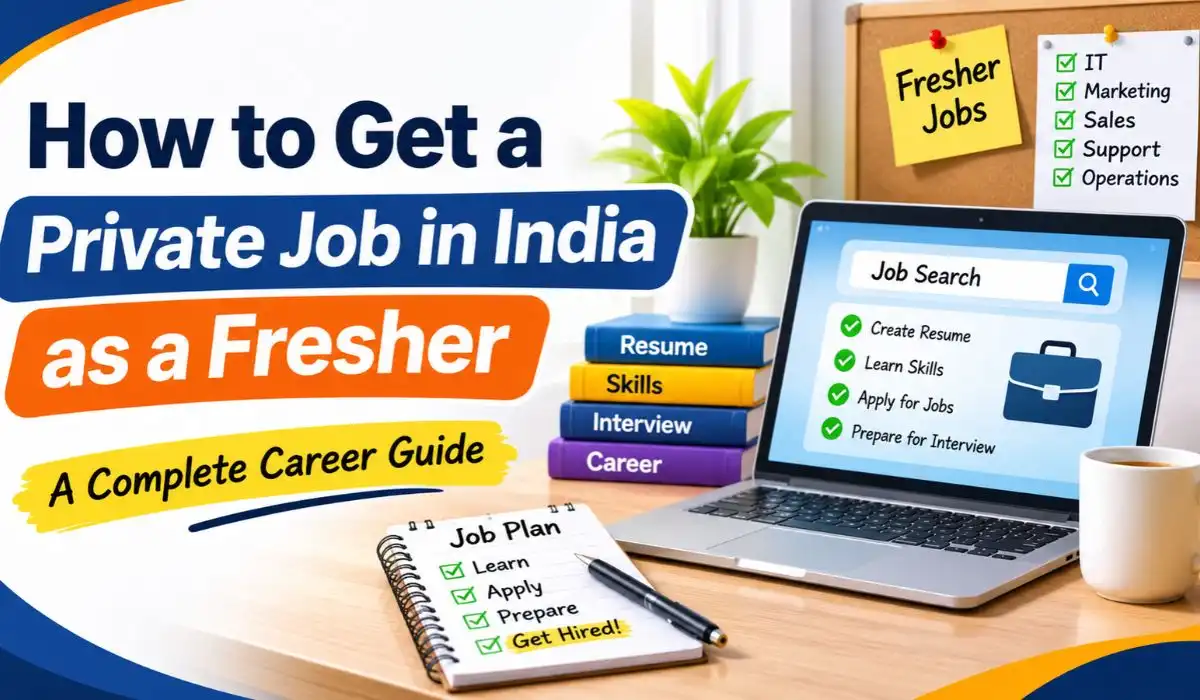
Getting your first private job in India can feel challenging, especially when you have no previous work experience. Many fresh graduates and students struggle to find employment because companies often prefer candidates with practical knowledge and professional experience. However, getting a private job as a fresher is absolutely possible if you have the right skills, a good resume, and a clear job search strategy.
India has a growing private sector with opportunities in IT, banking, healthcare, education, e-commerce, retail, customer service, digital marketing, and many other industries. Whether you have completed 12th grade, graduation, or a professional course, you can find suitable entry-level job opportunities.
In this guide, we will explain how to get a private job in India as a fresher, where to find job openings, which skills to learn, and how to prepare for interviews.
1. Identify the Right Job for Your Qualification
The first step is to understand which jobs match your educational background and interests. Applying for every available vacancy without checking eligibility can waste your time.
Here are some common private job opportunities based on educational qualifications:
Jobs After 12th:
- Customer Support Executive
- Sales Executive
- Data Entry Operator
- Retail Sales Associate
- Office Assistant
- Telecaller
- Receptionist
Jobs After Graduation:
- Business Development Executive
- HR Executive
- Digital Marketing Executive
- Customer Relationship Executive
- Operations Executive
- Banking Process Associate
- Content Writer
Jobs After Technical Courses:
- Junior Software Developer
- Web Developer
- Technical Support Executive
- IT Help Desk Associate
- Graphic Designer
- Junior Data Analyst
Choose a position that matches your qualifications, abilities, and career interests. You can also explore internships if you want to gain practical experience before applying for a full-time job.
2. Create a Professional Resume
A resume is one of the most important documents when applying for your first private job. It introduces your qualifications, skills, education, and achievements to potential employers.
Since you are a fresher, you may not have professional work experience. Instead, focus on your educational background, projects, internships, certifications, and practical abilities.
Your resume should include:
- Full name and contact details
- Professional career objective
- Educational qualifications
- Technical and soft skills
- Internship experience, if available
- Academic or personal projects
- Relevant certifications
- Languages you can speak
Keep your resume simple, professional, and preferably one page long. Avoid unnecessary personal information and spelling mistakes.
You can create a free resume using tools such as Canva or Google Docs. Before applying, save your resume as a PDF file with a professional filename.
3. Learn Skills That Companies Are Looking For
Having a degree is helpful, but employers also want candidates who can perform practical tasks. Developing job-related skills can improve your chances of getting selected.
Some useful skills for freshers include:
Computer Skills: Learn Microsoft Word, Excel, PowerPoint, email communication, and basic computer operations.
Communication Skills: Improve your speaking, writing, listening, and professional communication abilities.
Digital Marketing: Learn SEO, social media marketing, Google Ads, and content marketing.
Technical Skills: Depending on your career goals, learn programming, web development, data analytics, or basic IT support.
Customer Service Skills: Learn how to communicate with customers, handle complaints, and provide helpful solutions.
You do not need to learn everything at once. Choose skills related to your target job and practice them regularly.
4. Register on Popular Job Search Websites
Online job portals make it easier for freshers to discover private job vacancies across India. You can create a profile, upload your resume, search for relevant positions, and apply directly to employers.
Some popular job search platforms include:
- Naukri: One of India’s popular platforms for finding private-sector jobs across different industries.
- LinkedIn: Useful for connecting with recruiters, discovering vacancies, and building professional relationships.
- Indeed: Provides job listings from companies across multiple industries.
- Apna: Offers opportunities in sales, customer support, office administration, and other entry-level roles.
- Foundit: Helps job seekers explore opportunities based on qualifications and experience.
- Internshala: Useful for finding internships and entry-level opportunities.
Create a complete profile on these platforms and upload your latest resume. Use relevant keywords when searching, such as “Fresher Jobs,” “Entry-Level Jobs,” “Graduate Jobs,” and “No Experience Required.”
5. Apply for Jobs Regularly
Creating a profile on job portals is not enough. You need to apply consistently and target suitable vacancies.
Follow these simple steps:
- Search for jobs based on your city, qualification, and preferred industry.
- Read the job description carefully.
- Check the required skills and eligibility criteria.
- Customize your resume according to the position.
- Apply through the official job portal or company website.
- Keep track of the applications you submit.
- Follow up professionally when appropriate.
Try to apply for relevant vacancies every day rather than sending applications randomly. Quality applications are generally more useful than applying to hundreds of unrelated positions.
6. Prepare for Private Job Interviews
An interview is an opportunity to demonstrate your communication skills, confidence, knowledge, and willingness to learn.
Many companies conduct basic interviews for fresher positions. Some may also include aptitude tests, technical assessments, or communication rounds.
Prepare answers to common interview questions such as:
- Tell me about yourself.
- Why do you want to join our company?
- What are your strengths and weaknesses?
- Why should we hire you as a fresher?
- What are your career goals?
- Are you comfortable working in a team?
Research the company before attending an interview. Understand its business, products, services, and the job responsibilities.
Dress professionally, arrive on time, speak clearly, and answer questions honestly. If you do not know an answer, avoid making up information. Show that you are willing to learn.
7. Consider Internships and Entry-Level Opportunities
If you are unable to find a full-time job immediately, internships can be a good starting point.
An internship gives you practical experience and helps you understand how companies operate. You can develop professional skills, work on real projects, and build connections with industry professionals.
Many companies offer internships in:
- Digital Marketing
- Content Writing
- Graphic Designing
- Web Development
- Human Resources
- Sales and Business Development
- Data Analytics
After completing an internship, you may receive a certificate, professional references, or even a full-time job offer, depending on your performance and the company’s requirements.
8. Build a Strong LinkedIn Profile
LinkedIn is more than a social networking platform. It is a professional networking website where job seekers can connect with recruiters, hiring managers, and industry experts.
As a fresher, create a professional profile with the following information:
- A clear profile photograph
- A professional headline
- Educational background
- Skills and certifications
- Academic and personal projects
- A short professional summary
Follow companies you want to work for and connect with recruiters in your preferred industry.
You can also share your projects, certificates, and professional achievements. A well-maintained LinkedIn profile can help recruiters understand your abilities and discover your profile.
9. Avoid Fake Job Offers and Recruitment Scams
Freshers searching for their first job can sometimes become targets of recruitment scams. Fraudsters may advertise fake vacancies and demand money in exchange for interviews, job offers, or guaranteed employment.
Keep these safety tips in mind:
- Never pay money for a guaranteed job offer.
- Avoid sharing OTPs, passwords, or banking details with unknown recruiters.
- Verify the company’s official website and contact information.
- Be careful with offers that promise unusually high salaries without interviews.
- Check the recruiter’s identity before sharing sensitive documents.
- Apply through trusted job portals or official company career pages.
A genuine employer generally does not require candidates to pay a recruitment fee for a regular job opportunity.
10. Stay Consistent and Keep Improving
Finding your first private job may take time. You might apply to several companies before receiving an interview call. Rejections are a normal part of the job search process.
Instead of losing confidence, use each experience to improve your resume, communication skills, and interview preparation.
Set a daily routine for job searching, learning new skills, and practicing interview questions. Keep updating your resume as you complete courses, projects, or internships.
Remember that your first job does not have to be your dream job. It can be the starting point of a successful professional career.
Best Industries for Freshers to Find Private Jobs in India
Several industries offer entry-level opportunities for candidates without previous full-time work experience.
| Industry | Common Entry-Level Jobs |
|---|---|
| Information Technology | IT Support, Junior Developer |
| Banking and Finance | Process Associate, Sales Executive |
| E-commerce | Operations Executive, Customer Support |
| Healthcare | Receptionist, Administrative Assistant |
| Education | Academic Counselor, Telecaller |
| Digital Marketing | SEO Executive, Social Media Executive |
| Retail | Sales Associate, Store Executive |
| BPO and Customer Service | Customer Support Executive, Voice Process Associate |
The availability of jobs depends on location, qualifications, employer requirements, and current hiring conditions.
Conclusion
Getting a private job in India as a fresher does not require years of professional experience. What matters most is having the right qualifications, relevant skills, a professional resume, and a willingness to learn.
Start by identifying suitable job roles, improving your communication and computer skills, and registering on trusted job portals such as Naukri, LinkedIn, Indeed, and Apna. Apply regularly, prepare properly for interviews, and consider internships to gain practical experience.
Most importantly, stay patient and consistent throughout your job search. Your first job may take some effort to find, but every application, interview, and new skill can bring you closer to your career goals.